Spring Fling School Dance Planning Tips Every Parent Organizer Needs
The Spreadsheet That Almost Broke Me
It's 11:47 PM on a Tuesday. You're hunched over your laptop, cross-referencing three different email threads, a crumpled paper sign-up sheet someone left in the school office, and a group text that now has 47 unread messages. You have no idea how many kids are actually coming to the Spring Fling. The venue needs a headcount by Friday. The DJ is asking for a deposit. And you — the brave, well-meaning parent who said "sure, I'll help organize" at the October PTA meeting — are seriously reconsidering every life decision that led you here.
Sound familiar? You're not alone. Every year, thousands of parent volunteers take on school dance planning with the best intentions and quickly discover that coordinating a middle or high school event is a logistical beast hiding inside a fun party. The stakes feel low from the outside — it's just a dance, right? — but when you're managing venue capacity, chaperone ratios, dietary restrictions for the snack table, and a DJ who only responds to texts at midnight, it stops feeling casual very fast.
The good news: with the right systems in place before things spiral, a Spring Fling can be genuinely fun to organize — and absolutely magical for the students. Here's exactly how to pull it off.
Step 1: Lock In Your Core Team Before You Do Anything Else
The single biggest mistake first-time school event organizers make is trying to do too much alone. Before you book a venue, create a flyer, or even set a date, you need a committee of 4–6 committed parents with clearly defined roles.
Event Chair (you): Big-picture coordination and vendor communication
Logistics Lead: Venue, setup, teardown, and timeline
Decorations Lead: Theme, supplies, and day-of setup crew
Finance Lead: Budget tracking, ticket sales, and receipts
Communications Lead: Parent outreach, student announcements, and RSVP management
Chaperone Coordinator: Recruiting, scheduling, and briefing adult volunteers
When Sarah, a parent organizer at a suburban middle school in Ohio, divided these roles clearly at her first planning meeting, she said the event "went from feeling impossible to feeling like a project I could actually manage." Without clear ownership, every decision becomes a group debate and nothing moves forward.
Step 2: Set Your Budget Early — and Pad It by 20%
Nothing derails a school dance faster than running out of money three weeks before the event. Start with a realistic line-item budget that includes:
Venue rental or custodial fees
DJ or music licensing (if using a playlist)
Decorations and lighting
Refreshments and napkins, cups, serving supplies
Photo booth props or backdrop (wildly popular with middle schoolers)
Printing costs for tickets or signage
Contingency fund — always at least 15–20% of total budget
Ticket sales are typically your primary revenue source, which is exactly why getting an accurate headcount early is so critical. If you're estimating 150 students and only 90 show up, your per-student cost jumps dramatically. This is where smart RSVP management isn't just helpful — it's financially essential.
Step 3: Choose a Theme That Actually Excites Students (Not Just Adults)
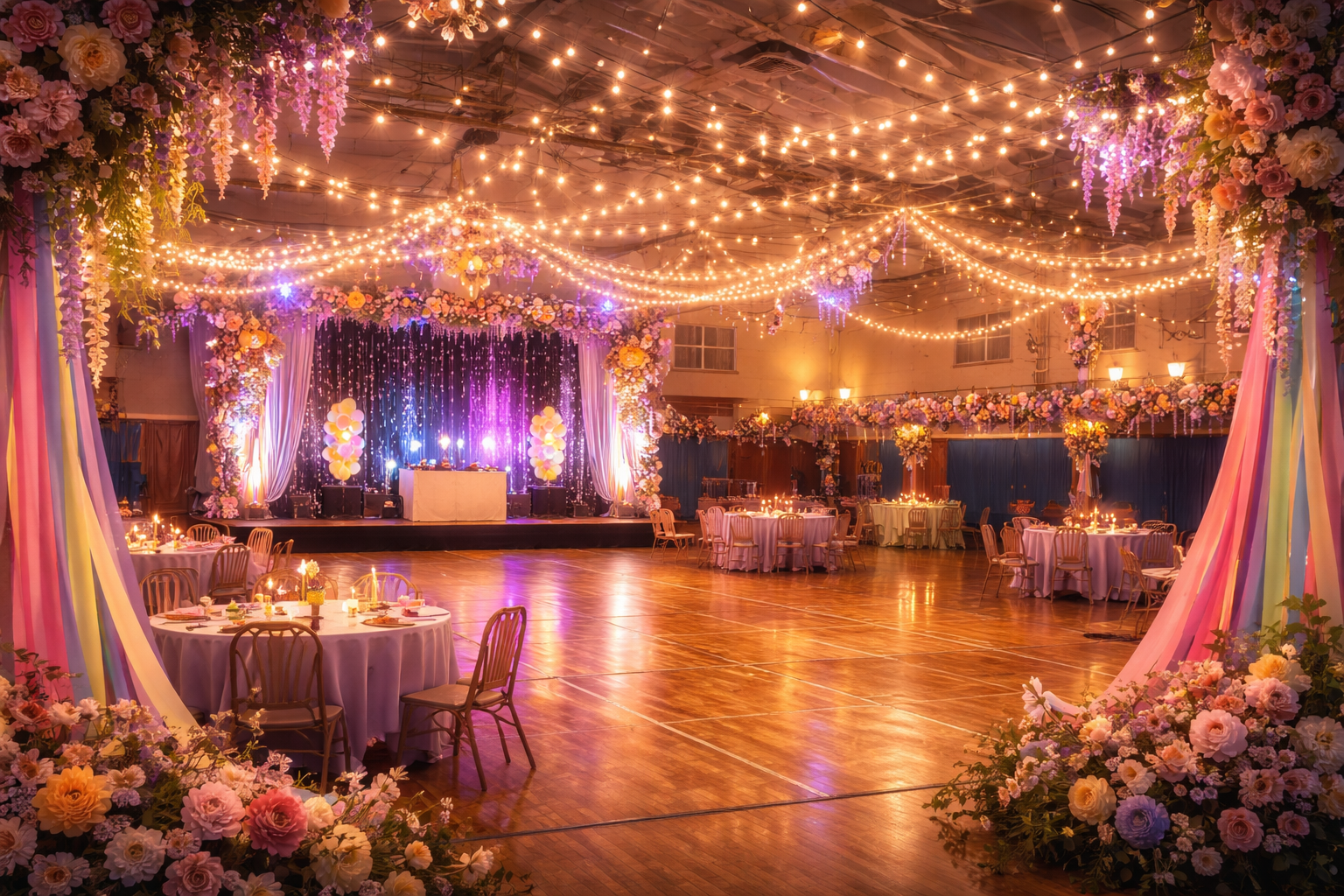
Here's a hard truth: the adults planning the dance often gravitate toward themes they find charming — garden parties, vintage Hollywood, Great Gatsby — while students want something they can actually get excited about on social media. The sweet spot is a theme that's visually striking, easy to dress for, and feels current.
Some Spring Fling themes that have worked brilliantly in recent years:
Neon Garden Party: Floral meets blacklight — flowers everywhere, but with a glow-in-the-dark twist
Under the Stars / Galaxy: Deep blues, purples, silver stars, fairy lights everywhere
Tropical Escape: Palm leaves, bright colors, easy to dress for, feels festive
Retro Arcade: Pixel art, bright colors, nostalgic — huge hit with Gen Z
Spring in Paris: Elegant but accessible, works for all genders
Pro tip: Run a quick poll in your school's student council or via a Google Form before finalizing the theme. When students feel ownership over the event, attendance goes up. It's that simple.
Step 4: Get Your RSVPs Right — This Is Not Optional
If there's one area where school dance planning consistently falls apart, it's RSVP collection. Paper forms get lost. Email replies go to spam. Group texts become unmanageable. And then you're standing at the venue on a Friday night not knowing if you ordered enough food for 80 people or 180.
The solution is to use a dedicated digital RSVP tool from day one. Platforms like RSVPlinks let you create a clean, shareable event link that parents and students can use to confirm attendance in seconds — no account required, no confusing forms. You get a real-time dashboard showing exactly who's coming, dietary needs, and whether they need a chaperone match.
Here's a system that works:
Send the RSVP link 4–5 weeks before the event via school email, the parent newsletter, and the school's social media pages.
Set a firm RSVP deadline that's at least 10 days before the event — this gives you time to finalize vendor orders.
Send two reminder messages: one at the two-week mark and one three days before the deadline.
Close RSVPs 48 hours before the event and share your final headcount with all vendors immediately.
When the Jefferson Middle School PTA switched from paper forms to a digital RSVP link for their Spring Fling, their confirmed headcount accuracy went from roughly 60% to over 90%. They ordered the right amount of food, hit their budget targets, and — crucially — the organizers actually slept the week before the event.
Step 5: Build a Day-of Timeline and Share It With Everyone
A school dance without a written timeline is an anxiety spiral waiting to happen. Build a detailed schedule starting from setup and ending with final cleanup, and share it with every committee member and chaperone in advance.
A sample Spring Fling day-of timeline might look like this:
3:00 PM: Decorations crew arrives, begins setup
4:30 PM: DJ arrives, sound check
5:00 PM: Refreshment table setup complete
5:30 PM: Chaperone briefing — rules, zones, emergency procedures
6:00 PM: Doors open, students begin arriving
6:00–8:30 PM: Dance in progress
8:15 PM: DJ announces last songs, photo booth closes
8:30 PM: Event ends, students dismissed to parent pickup
8:30–9:30 PM: Cleanup crew takes over
Assign a specific person to own each time block. When everyone knows their role and the clock, the event runs itself.
Step 6: Chaperone Smart, Not Just Enough
Most schools require a minimum chaperone-to-student ratio (often 1:10 or 1:15). But just hitting the number isn't enough — you need the right chaperones in the right spots. Brief your volunteers before the event. Cover:
Where they're stationed and what area they're responsible for
The school's behavior expectations and dress code enforcement
Emergency procedures and who to contact
The "no phones at the DJ booth" rule (trust us on this one)
Consider using your RSVP platform to collect chaperone sign-ups alongside student RSVPs. RSVPlinks, for example, allows you to create separate response tracks so you can manage both student attendance and volunteer commitments from one dashboard.
Step 7: Plan the Post-Event Debrief
This step gets skipped every single year, and every year organizers regret it. Within one week of the event, gather your committee (even just virtually) and document:
What worked brilliantly and should be repeated
What flopped and why
Vendor contacts worth keeping
Budget actuals vs. estimates
Student and parent feedback (a quick post-event survey takes five minutes to send)
This debrief document becomes gold for whoever organizes next year's Spring Fling. Leave the gift you wish someone had left for you.
Three Things You Can Do Today
You don't need to have everything figured out to start moving forward. Here are three concrete actions you can take right now:
Send one email today to recruit your core committee. You just need four to six people. One email. Do it now.
Set up your RSVP link this week. Head to RSVPlinks, create your event, and have a shareable link ready before you send out any announcements. Getting your RSVP infrastructure in place early is the single highest-leverage thing you can do for event planning sanity.
Draft a one-page budget. Even rough numbers. Knowing your financial constraints before you fall in love with a DJ or a décor vision will save you enormous stress later.
A great Spring Fling doesn't happen by accident. It happens because someone — someone exactly like you — cared enough to plan it well. The students will remember the night. Make sure you remember it fondly too.