How to Plan a Shavuot Celebration Dinner for Your Community With Online Invitations
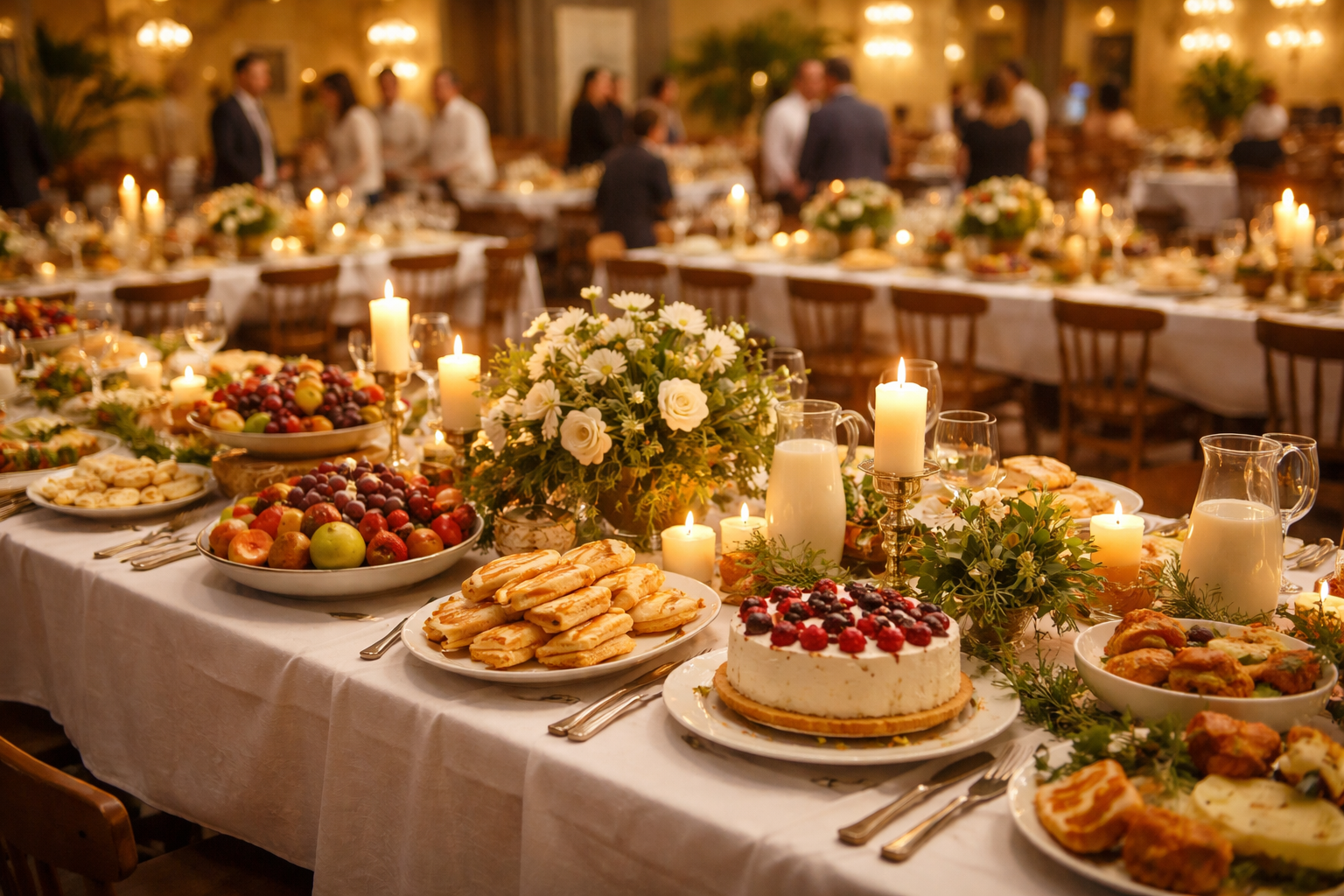
The Chaos Nobody Warns You About When Planning a Community Shavuot Dinner
It's two weeks before Shavuot. You're the volunteer coordinator for your synagogue's annual community dinner — the one that feeds 80 people, requires dairy-only catering, and somehow needs to account for six different dietary restrictions, a Torah study session, and a dessert table that would make your grandmother weep with pride. You've sent out a mass email. Then another. Then a group text. Then someone's husband calls to ask if his mother-in-law can come. You have no idea how many cheesecakes to order. You're running on coffee and anxiety.
Sound familiar? Planning a Shavuot community dinner is one of the most meaningful — and logistically demanding — events on the Jewish calendar. The holiday celebrates the giving of the Torah at Mount Sinai and the harvest season, and it's traditionally marked with all-night Torah study, dairy foods, and communal gathering. But the beauty of the celebration can quickly get buried under a mountain of unanswered RSVPs, dietary confusion, and last-minute headcount chaos.
This guide is here to fix that. Whether you're organizing a synagogue dinner for 100 or a neighborhood Shavuot gathering for 25, here's exactly how to plan it — with less stress, better turnout, and online invitations that actually get responses.
Step 1: Lock In Your Vision Before You Invite Anyone
Before a single invitation goes out, you need a clear picture of what you're planning. Shavuot dinners can range from casual potluck-style gatherings to formal sit-down meals with programs and speakers. Deciding this upfront shapes everything — your venue, your catering needs, your invitation wording, and your timeline.
Ask yourself these questions first:
- Will this be a catered meal or a potluck? A potluck requires coordination of who brings what (and in a dairy-only context, you need to be specific). A catered meal requires an accurate headcount well before the event.
- Will there be a Torah study component? Many communities hold a late-night learning session. If yours does, your invitation needs to communicate the schedule clearly.
- What's your capacity? If your venue holds 60 people, you need RSVPs — not just a vague sense of who might show up.
- Are children welcome? Shavuot often brings whole families. Knowing your age range affects seating, programming, and food quantities.
Example: A community center in Chicago planned a Shavuot dinner for families with young children. By deciding upfront to include a kids' activity table and a separate dairy dessert station, they were able to include those details in their invitation — and saw a 40% higher response rate because families knew exactly what to expect.
Step 2: Build Your Guest List With Intention
Community events like Shavuot dinners often have fuzzy guest lists — regulars, occasional attendees, new members, and the ever-present "I'll forward this to a few friends" crowd. This is where things get messy if you're not organized.
Start by segmenting your list:
- Core community members — synagogue members, regular attendees, people who came last year
- New or prospective members — a Shavuot dinner is a beautiful entry point for people exploring Jewish community life
- Extended invitees — friends, neighbors, or family members who may be interested
Keep your list in a spreadsheet or a platform that lets you track who's been invited, who's responded, and who needs a follow-up. This becomes critical when you're managing dietary needs and seating arrangements.
Step 3: Send Online Invitations That Do the Heavy Lifting
Here's where most community organizers lose hours of their lives: chasing RSVPs. Someone says "I think we're coming" in a hallway conversation. Another person texts a maybe. A family of five responds to the group email with "count us in!" but doesn't specify if that includes the grandparents.
Online invitations solve this — but only if they're set up correctly. Using a platform like RSVPlinks lets you create a dedicated event page where guests can confirm attendance, indicate guest counts, and submit dietary preferences all in one place. No more spreadsheet archaeology at midnight.
Here's how to set up your Shavuot invitation for maximum response rate:
- Write a warm, specific subject line. "You're Invited to Our Shavuot Community Dinner — June 11" outperforms "Shavuot Event" every single time. Specificity creates urgency and clarity.
- Include the essential details upfront: date, time, location, dress code (if any), and whether it's a catered meal or potluck. Don't make guests scroll to find the basics.
- Add a dietary preference field. For a dairy Shavuot dinner, you might still have guests with lactose intolerance, nut allergies, or vegan preferences. Ask this question in the RSVP form itself — not as a separate follow-up email.
- Set a clear RSVP deadline. "Please RSVP by June 4" is non-negotiable if you're ordering catering. State the reason: "We need your response by June 4 to confirm our catering order." People respond better when they understand why the deadline matters.
- Enable automatic reminders. Send a reminder 5 days before the RSVP deadline and again 2 days before. Most responses come after the first reminder, not after the initial invitation.
Example: A synagogue in New Jersey switched from email-and-phone RSVPs to an online invitation system for their Shavuot dinner. Their response rate jumped from 55% to 82% — and they collected dietary information from every single respondent without a single follow-up call.
Step 4: Coordinate the Menu Like a Pro
Shavuot is famously the dairy holiday — blintzes, cheesecake, kugel, quiche, and an abundance of cream cheese are practically required. But feeding a community means navigating real dietary complexity.
Once your RSVPs are in, sort your responses by dietary need and share that list directly with your caterer or potluck coordinators. A few practical tips:
- Plan for 10–15% more than your confirmed headcount. Walk-ins happen at community events, especially Shavuot.
- Label everything clearly at the event. Even at a dairy dinner, guests with nut allergies or gluten sensitivities need to know what's safe.
- If it's a potluck, assign categories. Use your online RSVP form to let guests select what they'll bring — appetizer, main dish, side, or dessert. This prevents the classic "six people brought cheesecake" scenario (delicious, but not a balanced meal).
Step 5: Plan the Program, Not Just the Food
A Shavuot dinner without some connection to the holiday's meaning is just a nice meal. The most memorable community Shavuot events weave in the spiritual and educational elements that make the holiday unique.
Consider including:
- A brief D'var Torah — a short teaching connected to Shavuot, the Book of Ruth (traditionally read on Shavuot), or the Ten Commandments
- An all-night learning option — even if most guests won't stay until sunrise, offering a late-night Torah study session honors the tradition of Tikkun Leil Shavuot
- A creative element for families — a craft, a story for children, or a group activity that connects kids to the holiday
- A moment of gratitude — Shavuot is also a harvest festival; opening or closing with a collective expression of thanks grounds the evening in meaning
Include the program schedule in your online invitation so guests can plan accordingly. If the Torah study session runs until midnight, people need to know that before they RSVP — especially parents with young children.
Step 6: Manage Day-Of Logistics Without Losing Your Mind
With your RSVPs collected and your headcount confirmed, the day-of execution becomes much smoother. A few final steps:
- Print or download your RSVP list and assign a volunteer to manage check-in at the door. RSVPlinks makes it easy to export your guest list for exactly this purpose.
- Set up a welcome station with name tags — especially important for a community event where new members may not know everyone.
- Have a buffer plan for dietary needs. Keep a few extra portions of allergy-friendly options in reserve for guests whose needs weren't captured in advance.
- Designate a point person for questions so you're not fielding every "where do I sit?" inquiry yourself.
Your Three Next Steps — Starting Today
Planning a Shavuot community dinner doesn't have to be an exercise in chaos management. Here's what to do right now:
- Set your date and lock your venue — Shavuot falls on the 6th and 7th of Sivan each year. In 2025, that's June 2–3. Community venues book fast, so confirm your space this week.
- Build your invitation on RSVPlinks — create your event page, add your dietary preference field, set your RSVP deadline, and enable automatic reminders. This single step will save you more time than anything else on this list.
- Draft your program before you send invitations — guests who know what the evening holds are far more likely to commit. A clear schedule in your invitation is one of the most underrated tools for driving RSVPs.
Shavuot is a holiday about receiving something precious — Torah, community, tradition. The dinner you plan is an act of giving that back to the people around you. With the right tools and a clear process, you can spend less time chasing headcounts and more time actually celebrating.