How to Plan a Memorable Easter Brunch Party Step by Step
The Easter Brunch Panic Is Real — And It Starts Earlier Than You Think
It's the Wednesday before Easter. You've told yourself for three weeks that you'd 'figure out the details later.' Now you're staring at a group chat full of question marks, your sister is asking if she should bring a dish, your neighbor just invited themselves, and you have absolutely no idea how many people are actually coming. The ham is still frozen. The tablecloth you wanted is sold out everywhere. Sound familiar?
Easter brunch is one of those deceptively tricky gatherings — it feels casual enough that people underplan it, but it's actually one of the most logistically demanding meals of the year. You're blending breakfast and lunch, accommodating dietary restrictions across multiple generations, decorating for a holiday with a very specific aesthetic, and somehow making it all feel effortless. When it works, it's magical. When it doesn't, it's a chaotic, expensive mess that leaves the host exhausted and quietly vowing never to do it again.
The good news? A memorable Easter brunch doesn't require a catering budget or a Pinterest-perfect home. It requires a clear plan, an early start, and a few smart decisions made in the right order. Here's exactly how to do it.
Step 1: Lock In Your Guest List and Send Invitations — 3 to 4 Weeks Out
Everything else depends on this step. You cannot plan a menu, buy supplies, or set a budget without knowing roughly how many people are coming. And yet this is the step most hosts delay the longest.
Start by deciding on a firm headcount range — not a vague 'maybe 15 to 20 people,' but a real number you're designing the party around. Are you hosting an intimate family brunch of 10? A neighborhood gathering of 30? A kids-heavy Easter egg hunt party that doubles as brunch for the adults?
Once you have your list, send invitations immediately — and make them count. A quick text or Facebook post won't give you the information you actually need. A proper invitation should include the date, time, location, dress code if any, and a clear RSVP deadline. Crucially, it should ask about dietary restrictions and whether guests are bringing children.
This is where a platform like RSVPlinks makes a real difference. Instead of chasing down responses across three different apps, you can send a single invitation link that collects RSVPs, dietary notes, and headcounts in one place. When your cousin's husband suddenly goes gluten-free and your aunt needs a vegetarian option, you'll already have that information on file — not buried in a text thread from two weeks ago.
Action step: Draft your guest list today. Set your RSVP deadline for 10 days before the event. Send invitations this week.
Step 2: Choose Your Brunch Format — Buffet, Seated, or Stations
The format you choose will shape every other decision you make — from how much food you need to how you arrange your space. There are three main options:
Seated plated brunch: Elegant and controlled, best for smaller groups of 8–12. You serve each course, which means more work for the host but a more intimate, restaurant-style experience.
Buffet style: The most popular choice for Easter brunch. Guests serve themselves, you can prep most dishes ahead of time, and it scales easily from 15 to 50 people. Works especially well when you have a mix of ages and dietary needs.
Food stations: The most festive and interactive option. Think a mimosa bar, a waffle station, a charcuterie and cheese board, and a dessert table. Stations create natural conversation points and let guests graze at their own pace. Ideal if you want a party atmosphere rather than a formal meal.
Consider your space honestly. If your dining room seats 10 but you've invited 25, a buffet or station setup in your living room or backyard will feel intentional rather than cramped.
Real-world example: Sarah, a mom of three in Austin, switched from a seated Easter brunch to a station-based setup after her guest list grew to 28. She set up a mimosa bar on the kitchen island, a savory station on the dining table, and a dessert and candy table in the living room. Guests moved freely, kids could access the sweets table without disrupting adults, and Sarah spent less time serving and more time actually enjoying the party.
Step 3: Build a Menu That Works for Everyone
Easter brunch lives or dies by the menu. The sweet spot is a mix of savory and sweet dishes that can be mostly prepared ahead of time, with at least one showstopper centerpiece.
The Core Easter Brunch Menu Framework:
Savory anchor: Baked ham, smoked salmon platter, quiche, or an egg casserole (can be prepped the night before)
Egg dish: Deviled eggs, frittata, or a make-ahead breakfast strata
Bread and pastry: Hot cross buns, croissants, or a spring fruit coffee cake
Fresh and light: A spring salad, fruit platter, or yogurt parfait bar
Sweet finish: Carrot cake, lemon tart, or Easter-themed cupcakes
Drinks: Mimosas, sparkling lemonade, fresh-squeezed juice, coffee, and herbal tea
Use your RSVP data to adjust for dietary restrictions before you finalize the menu. If four guests are vegetarian, make your egg casserole the centerpiece and offer a hearty grain salad as a secondary anchor. If you have young children coming, include simple, kid-friendly options alongside the adult fare.
Pro tip: Aim for 70% of your menu to be dishes you can fully prepare the day before. This protects your morning-of sanity and lets you be a present, relaxed host rather than a sweating cook.
Step 4: Set the Scene — Décor That Feels Festive Without the Fuss
Easter has one of the most joyful and versatile visual palettes of any holiday — soft pastels, fresh florals, natural textures, and playful spring motifs. You don't need to spend a fortune to create a beautiful atmosphere.
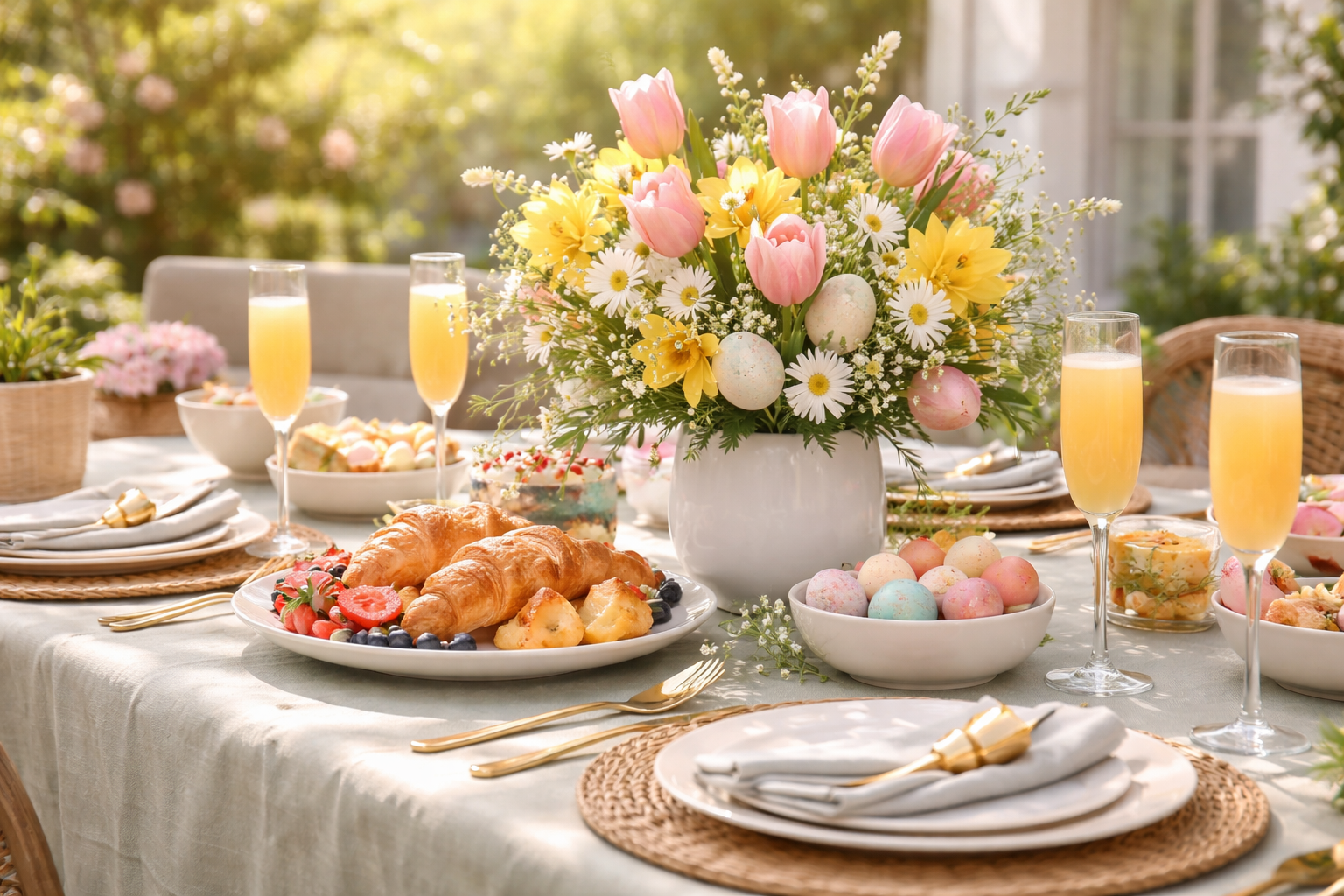
Centerpiece: A simple arrangement of tulips, daffodils, or hyacinths in a ceramic pot or a collection of mismatched vases creates an instantly spring-like focal point. Add a few decorated eggs nestled in the greenery for an Easter touch.
Table setting: Use a linen tablecloth in white, sage, or pale yellow. Layer cloth napkins in a contrasting pastel. Place a small chocolate egg or a sprig of flowers at each setting as a personal touch guests will notice.
Outdoor elements: If you're hosting outside or have a patio, string lights and potted herbs or flowers double as décor and create a garden-party feel.
Easter egg hunt zone: If children are attending, designate a clear hunt area with a basket for each child labeled with their name. This prevents chaos and ensures every child gets a fair share.
Step 5: Create a Day-Of Timeline So Nothing Falls Through the Cracks
Even experienced hosts get derailed on the day of the event. The solution is a written timeline, not a mental one.
Here's a sample timeline for a noon Easter brunch:
8:00 AM: Remove ham from fridge, start coffee cake or muffins
9:00 AM: Set the table, arrange décor, set up drink station
10:00 AM: Put ham in oven, assemble fruit platter, set out cold dishes
11:00 AM: Final kitchen prep, get dressed, do a walk-through of the space
11:45 AM: Open mimosa bar, light candles, put on music
12:00 PM: Guests arrive — you're calm, ready, and actually excited
Share this timeline with anyone helping you. If a family member is bringing a dish, confirm their arrival time and what they need (oven space, serving utensils, refrigerator room) in advance.
Step 6: Follow Up After the Party
The party doesn't end when guests leave. A quick follow-up — a group thank-you message, a few photos shared in a chat, or a personal note to guests who traveled far — turns a nice event into a genuinely memorable one. It also sets the tone for next year: people remember hosts who make them feel appreciated.
If you used RSVPlinks to manage your invitations, you can send a post-event message directly through the platform to all attendees — a small touch that feels thoughtful without requiring individual texts to 25 people.
Your 3 Clear Takeaways for Today
1. Send your invitations this week — with a firm RSVP deadline and a request for dietary restrictions. Every other decision depends on knowing who's coming.
2. Choose your format before you plan your menu — buffet, seated, or stations. Let the format guide your food, your space setup, and your shopping list.
3. Build a day-of timeline and write it down — aim for 70% of your food to be prepped the day before, and give yourself a 15-minute buffer before guests arrive to simply breathe and enjoy what you've created.
Easter brunch is one of the most rewarding gatherings you can host — a celebration of spring, family, and the simple pleasure of a beautiful meal shared with people you love. With the right plan in place, it can also be one of the most enjoyable events you throw all year. Start now, and this time next week, you'll be the most prepared host in the room.