How to Plan a Festive Passover Seder Dinner Party for Family (Without Losing Your Mind)
The Passover Panic Is Real
It's two weeks before Passover, and you've just realized you haven't confirmed how many people are coming to your Seder. Your aunt says she's bringing her new boyfriend. Your cousin texted that she might be gluten-free now — or was that last year? Your brother-in-law's family of five hasn't responded at all. You're staring at a recipe for brisket that serves eight, a dining room table that seats twelve, and a guest list that could be anywhere between fifteen and twenty-three people.
Sound familiar? Planning a Passover Seder dinner party is one of the most meaningful — and logistically complex — events a family can host. Unlike a casual dinner, the Seder carries deep religious significance, a specific ritual structure, dietary laws, and the expectation that everything will feel just right. The pressure is real. But with the right approach, your Seder can be joyful, organized, and genuinely memorable for all the right reasons.
Start With a Confirmed Headcount — Before Anything Else
Every Seder planning disaster traces back to the same root cause: not knowing how many people are actually coming. You cannot shop, cook, or seat guests without a real number. And in 2025, casually asking "are you coming?" at a family gathering three weeks out is a recipe for chaos.
The solution is simple: send a formal invitation with a clear RSVP deadline at least three weeks before Passover. Platforms like RSVPlinks let you create a beautiful digital invitation for your Seder, collect RSVPs in real time, and even ask custom questions — like dietary restrictions or whether guests are bringing children. No more chasing down your uncle on the phone or trying to remember who texted you "probably yes" in a group chat.
Action step: Set your RSVP deadline 10 days before the Seder. This gives you time to follow up with non-responders and finalize your shopping list before the pre-Passover grocery rush hits its peak.
Build Your Seder Timeline Backwards
The Seder has a built-in structure — the Haggadah — which means your evening already has an order. Use that to your advantage. Work backwards from the time you want to serve the main meal and map out every task.
A Sample Backward Planning Timeline
3 weeks out: Send invitations, collect RSVPs, assign dish contributions
2 weeks out: Finalize menu, order specialty items (kosher wine, matzah, Seder plate elements), plan seating
1 week out: Deep clean the kitchen, begin chametz removal, shop for non-perishables
3–4 days out: Prep make-ahead dishes (charoset, soup stock, desserts)
Day before: Set the table, prepare Seder plate, brine or marinate proteins
Day of: Final cooking, set out Haggadahs, prepare children's activities
Think of the Seder timeline like a theatrical production. The Haggadah is your script, and you're the director. When the brisket is ready and the guests are seated, everything flows naturally — but only if the behind-the-scenes work happened on schedule.
Master the Passover Menu Without Overwhelming Yourself
Passover dietary laws (no chametz — leavened grains) already narrow your menu options, which is actually helpful. You're not starting from a blank slate. The challenge is feeding a crowd with varied tastes and dietary needs while honoring tradition.
The Core Seder Plate
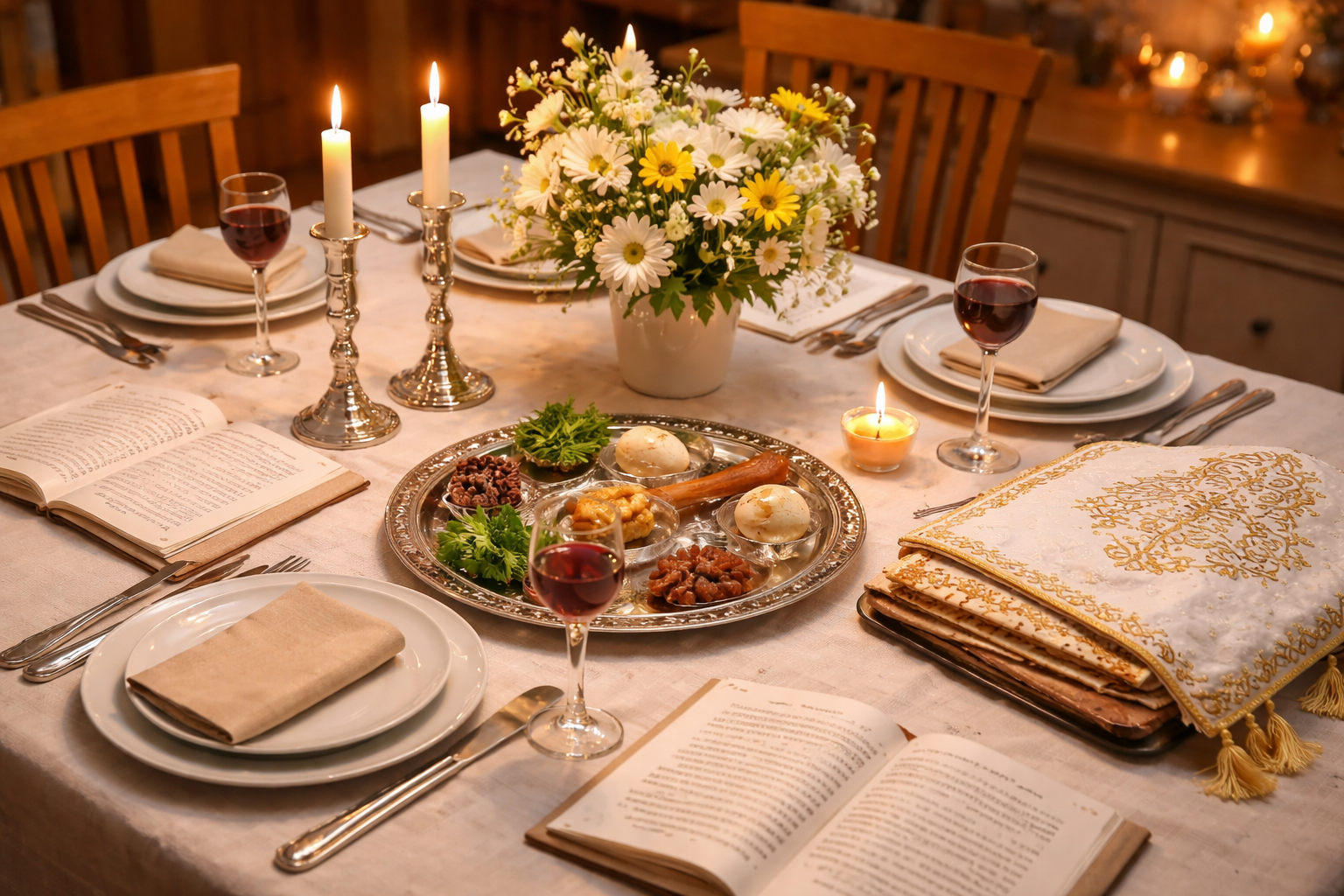
Before planning dinner, make sure your Seder plate is complete. You'll need: maror (bitter herbs, usually horseradish), charoset (apple-walnut-wine mixture), karpas (parsley or another vegetable), zeroa (roasted shank bone), beitzah (roasted egg), and for many Ashkenazi families, chazeret (romaine lettuce). Prepare these the day before to reduce day-of stress.
A Crowd-Pleasing Passover Menu Framework
Starters: Matzah ball soup (make the stock ahead), gefilte fish, chopped liver, or a simple salad with lemon vinaigrette
Main: Brisket (ideal for crowds — braises beautifully a day ahead), roasted chicken, or a salmon fillet for a lighter option
Sides: Roasted root vegetables, tzimmes (sweet carrot stew), potato kugel, asparagus with garlic
Dessert: Flourless chocolate cake, macaroons, fruit compote, or a pavlova
Pro tip: Make your brisket the day before. Brisket actually tastes better reheated, and it frees up your oven and your sanity on the day of the Seder.
Handling Dietary Restrictions
When you collect RSVPs, ask specifically about dietary needs. A guest who is vegetarian can't eat gefilte fish or brisket — you'll want a protein alternative ready. If someone is nut-allergic, traditional charoset (made with walnuts) needs a substitute. Knowing this in advance, rather than discovering it at the table, is the difference between a gracious host and a frantic one.
Create a Welcoming, Meaningful Atmosphere
The Seder is not just dinner — it's a multi-hour ritual experience meant to transport participants through the story of Exodus. Your atmosphere should support that journey.
Table Setting and Decor
Use white linens if you have them — they create a sense of occasion and reflect the holiday's themes of purity and renewal. Place a Haggadah at every seat before guests arrive. Consider small name cards so seating feels intentional rather than chaotic. Fresh flowers in spring colors (daffodil yellow, soft blue, white) add beauty without breaking the bank.
Engaging Children at the Seder
The Seder is specifically designed to engage children — the Four Questions are traditionally asked by the youngest child. But keeping kids engaged through a long evening requires a little extra effort. Consider:
Preparing small Afikomen bags they can decorate
Printing illustrated Haggadahs designed for children
Setting up a small "kids corner" with activity sheets about the Passover story
Giving older children a meaningful role — asking the Four Questions, leading a song, or explaining a symbol
Choosing the Right Haggadah
The Haggadah you choose sets the tone for your entire Seder. A traditional Maxwell House Haggadah runs long and formal. The Maxwell House version has been a staple for generations, but contemporary options like the New American Haggadah or family-friendly illustrated versions can make the ritual more accessible and engaging for mixed groups. Order enough copies for every seat — and a few extras.
Divide and Conquer: Assign Roles and Dishes
You do not have to do this alone. In fact, a Seder is one of the most natural potluck-style gatherings in Jewish tradition. Assign specific dishes to family members based on their strengths — your mother-in-law's charoset is legendary, your sister always brings the best wine, and your neighbor volunteered to handle dessert.
When you send your invitations through a platform like RSVPlinks, you can include notes asking guests to indicate what they'd like to bring. This eliminates the dreaded situation where three people show up with macaroons and nobody brought a vegetable.
Also assign non-food roles: someone to lead the Haggadah reading, someone to hide the Afikomen, someone to manage the kids' activities. Distributing responsibility transforms the Seder from a one-person performance into a true family celebration.
Day-Of: The Final Countdown
On the day of your Seder, protect your energy. The morning is for final cooking and table setup. The afternoon is for getting yourself ready — you deserve to arrive at your own table feeling calm and present, not frazzled.
Set a firm "doors open" time and communicate it clearly. If your Seder begins at 6:00 PM, invite guests for 5:30 PM. This gives a buffer for the inevitable late arrivals without delaying the ritual start for everyone else.
Light your candles, pour the first cup of wine, and take a breath. You've planned this. It's going to be beautiful.
Three Things to Do Right Now
If you're reading this with Passover on the horizon, here are your three immediate next steps:
Send your invitations today. Use a digital RSVP tool like RSVPlinks to create a beautiful Seder invitation, set a response deadline, and collect dietary restrictions — all in one place. Stop waiting for people to "figure out their plans."
Write your backward timeline. Open a notes app or grab a piece of paper. Start with the Seder date and work backwards, assigning every major task to a specific day. Put it somewhere you'll actually see it.
Call one family member and assign them a dish. Don't wait for volunteers. Pick up the phone, tell your sister the brisket is covered, and ask her to bring the charoset and a bottle of Manischewitz. Delegation is the secret ingredient in every great Seder.
Passover is a holiday built on the idea that even the most overwhelming journey — from slavery to freedom — can be navigated one step at a time. Your Seder is no different. Plan with intention, ask for help, and remember: the goal isn't perfection. It's presence.