How to Plan a Flag Day Neighborhood Patriotic Party Everyone on the Block Will Attend
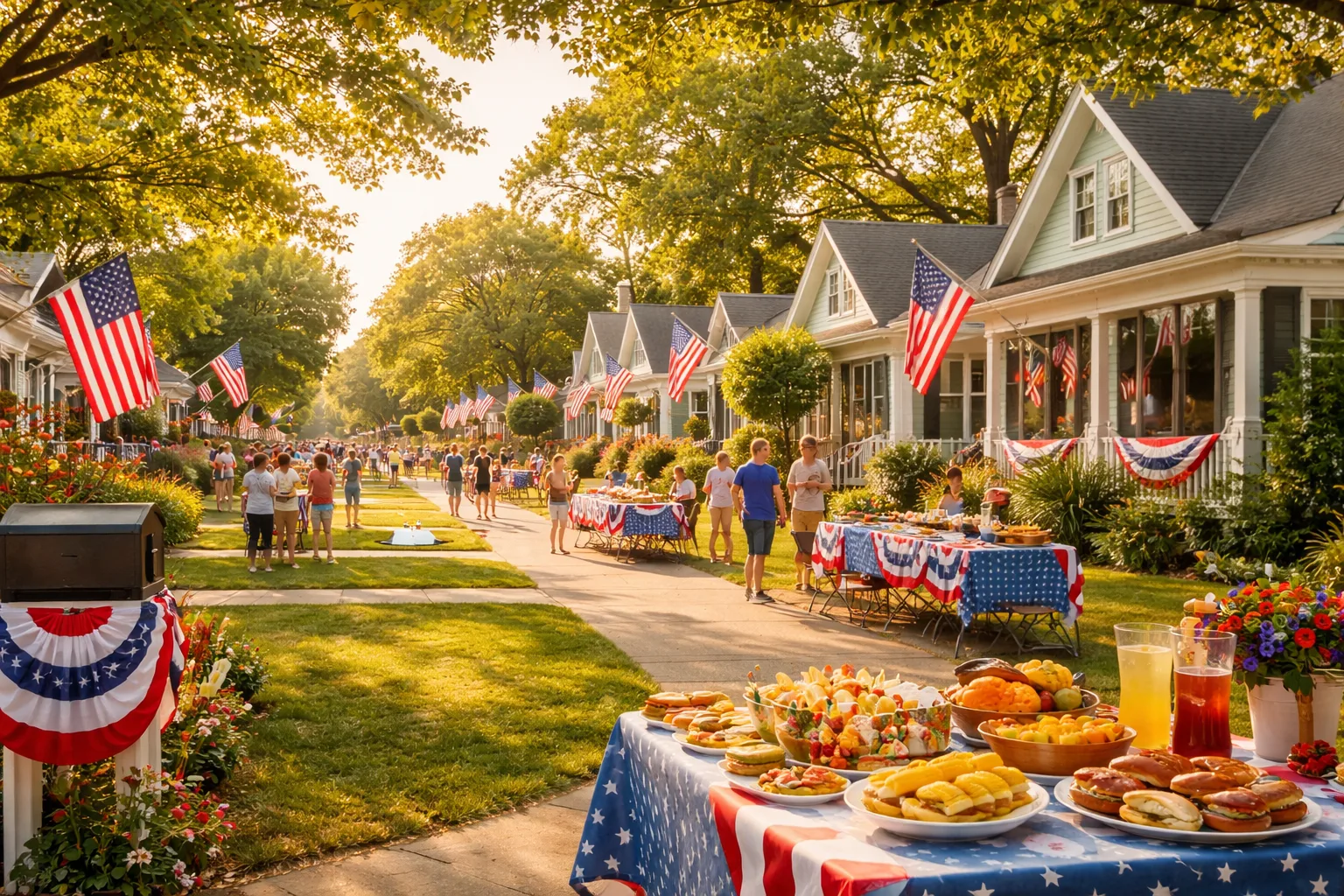
The Neighborhood Party That Almost Didn't Happen
You had the vision: red, white, and blue streamers, kids running through sprinklers, neighbors laughing over grilled corn, and someone's grandpa telling stories about flag ceremonies from decades past. You even bought the paper plates. But then came the chaos — half the block said 'maybe,' two families never responded, you over-ordered potato salad for 40 people and only 18 showed up, and the whole thing felt more like a sad backyard cookout than the community celebration you imagined.
Sound familiar? Planning a neighborhood patriotic party for Flag Day — June 14th — sounds simple until you realize that coordinating an entire block of people, managing food, activities, and logistics without a clear system is a recipe for stress, wasted money, and disappointment. But here's the good news: with the right approach, a Flag Day block party can become the most anticipated event of the summer. Here's exactly how to do it.
Why Flag Day Deserves Its Own Neighborhood Celebration
Flag Day is one of the most underrated patriotic holidays on the calendar. Established to honor the adoption of the American flag on June 14, 1777, it falls in the sweet spot of early summer — school is out or nearly out, the weather is warm, and people are hungry for community connection. Unlike the Fourth of July, which can feel overwhelming and expensive, Flag Day is low-key enough that neighbors who wouldn't normally host a party are happy to participate. It's the perfect excuse to bring the block together before summer scatters everyone to vacations and camps.
Step 1: Start With a Headcount — Before You Do Anything Else
The single biggest mistake neighborhood party planners make is skipping a proper RSVP process. You assume people will show up, or you do a quick text chain that gets buried, and suddenly you're guessing whether to buy 10 pounds of hot dogs or 30. Get a real headcount first.
Create a dedicated event invitation using a platform like RSVPlinks, where you can set up a clean, shareable link that captures names, how many guests each household is bringing, and even dietary restrictions. Send the link via text, neighborhood group chat, email, or post it on your neighborhood's Facebook group. Give people a clear RSVP deadline — two weeks before the event — so you have time to plan around actual numbers.
Mini-scenario: Sarah, who organized her street's first Flag Day party, sent an RSVPlinks link to 22 households. Within four days, she had confirmed responses from 17 families totaling 54 people. She knew exactly how much food to order, could plan seating, and even followed up personally with the five households that hadn't responded. The party felt full and intentional — not accidental.
Step 2: Pick a Format That Fits Your Block
Not all neighborhoods are built the same. Before you commit to closing the street, consider what format actually works for your block's layout, local permit requirements, and neighbor dynamics.
- Cul-de-sac cookout: Perfect if you live on a cul-de-sac — natural gathering space, minimal traffic concerns, easy to set up tables in a circle.
- Driveway crawl: Each household sets up a station — one does drinks, one does desserts, one does lawn games. Guests move from driveway to driveway. Great for longer blocks.
- Park or common area gathering: If your neighborhood has a park or HOA green space, reserve it early. This is the most scalable option for larger neighborhoods.
- Blocked street party: The classic. Check with your city or county about street closure permits — many municipalities have a simplified process for neighborhood events. Apply at least 4–6 weeks in advance.
Step 3: Assign Roles, Not Just Tasks
The fastest way to burn yourself out is to try to do everything. Instead of making a to-do list and hoarding it, assign roles to willing neighbors. Roles feel more meaningful and create accountability.
- The Grill Captain: Owns the grill, manages the meat timeline, coordinates with the food coordinator on quantities.
- The Decoration Lead: Handles all the red, white, and blue setup — flags, bunting, table covers, balloon arches.
- The Activities Director: Plans and runs games for kids and adults — three-legged races, flag trivia, water balloon tosses.
- The Food Coordinator: Manages the potluck sign-up, ensures variety (not 12 pasta salads), and handles any allergy considerations.
- The Music Manager: Curates a patriotic playlist and manages the speaker setup.
Mini-scenario: Tom volunteered as Grill Captain for his block's party and took the role seriously — he pre-marinated chicken the night before, set up a two-zone grill, and had food ready in waves so there was never a line. His neighbors still talk about it a year later.
Step 4: Build a Patriotic Atmosphere That Feels Intentional
The difference between a forgettable cookout and a memorable Flag Day party is atmosphere. You don't need to spend a fortune — you need to be intentional about the details.
- Flag display: Ask every household to fly their American flag that day. It transforms the entire street into a visual celebration before a single decoration is hung.
- Bunting and banners: Drape red, white, and blue bunting along fences, porches, and tables. It's inexpensive and immediately signals 'this is a real event.'
- Patriotic playlist: Mix classic Americana — Bruce Springsteen, John Denver, Ray Charles's 'America the Beautiful' — with upbeat summer hits. Avoid making it feel like a political rally; keep it celebratory.
- Flag trivia station: Set up a small table with fun facts about the American flag — how many times it's been redesigned, what each star represents, the history of Flag Day itself. Kids and adults love it.
- Photo backdrop: Hang a large American flag as a photo backdrop with a simple sign that says 'Happy Flag Day, [Your Street Name]!' Neighbors will take photos and share them — free community marketing for next year's party.
Step 5: Plan Food That Feeds a Crowd Without Overwhelming One Person
Flag Day falls in peak grilling season, so lean into it. A potluck-style cookout is the most practical format for a neighborhood party — it distributes the cost and effort, and people feel invested when they contribute.
Use your RSVPlinks response data to assign food categories to households when they RSVP. Ask families to sign up for: mains (grill-ready items), sides (salads, corn, baked beans), desserts (flag cake, berry parfaits, red-white-blue popsicles), or drinks (lemonade, iced tea, water).
- Grill staples: Hot dogs, burgers, veggie burgers, corn on the cob
- Patriotic desserts: Flag cake with strawberries and blueberries, red velvet cupcakes with white frosting and a blueberry on top, firecracker popsicles
- Drinks station: Set up a self-serve station with labeled pitchers — keeps lines short and lets people help themselves
Step 6: Plan Activities for Every Age Group
A neighborhood party lives or dies by whether people actually stay. Activities keep guests engaged and give kids something to do so parents can actually relax and socialize.
- For kids (ages 4–12): Three-legged race, water balloon toss, flag coloring station, patriotic scavenger hunt
- For teens: Cornhole tournament, flag trivia competition with prizes, lawn volleyball
- For adults: Bocce ball, horseshoes, a 'best patriotic dish' judging contest, neighborhood trivia (who's lived here longest? who has the most kids?)
- For everyone: A group flag-raising ceremony at the start of the party — simple, meaningful, and it gives the event a real opening moment that people remember
Step 7: Follow Up After the Party
The party isn't over when the last guest leaves. Send a quick thank-you message to everyone who attended — through your neighborhood group chat or via a follow-up message through RSVPlinks. Share the best photos. Call out the volunteers who made it happen. And plant the seed: 'Same time next year?'
This follow-up is what turns a one-time event into an annual tradition. Neighbors who felt seen and appreciated will not only come back — they'll bring others.
3 Things You Can Do Today to Get Started
- Set your date and create your RSVP link: Lock in June 14th and build your event invitation on RSVPlinks today. Share it in your neighborhood group chat this week while people's summer calendars are still open.
- Walk your block and recruit two volunteers: Knock on three doors and ask two neighbors to take on a role — Grill Captain and Decoration Lead. Personal asks work far better than group messages.
- Check your city's permit requirements: If you want to close the street, look up your municipality's block party permit process today. Many have a 4–6 week lead time.
Flag Day is June 14th — and it's closer than you think. The neighborhood party that brings your block together, creates memories, and maybe even starts a tradition doesn't require a massive budget or months of planning. It requires a clear headcount, a few good volunteers, some red, white, and blue streamers, and the confidence to just start. Your neighbors are waiting for someone to make it happen. That someone is you.