How to Plan an End-of-School-Year Class Party That Parents and Kids Both Love
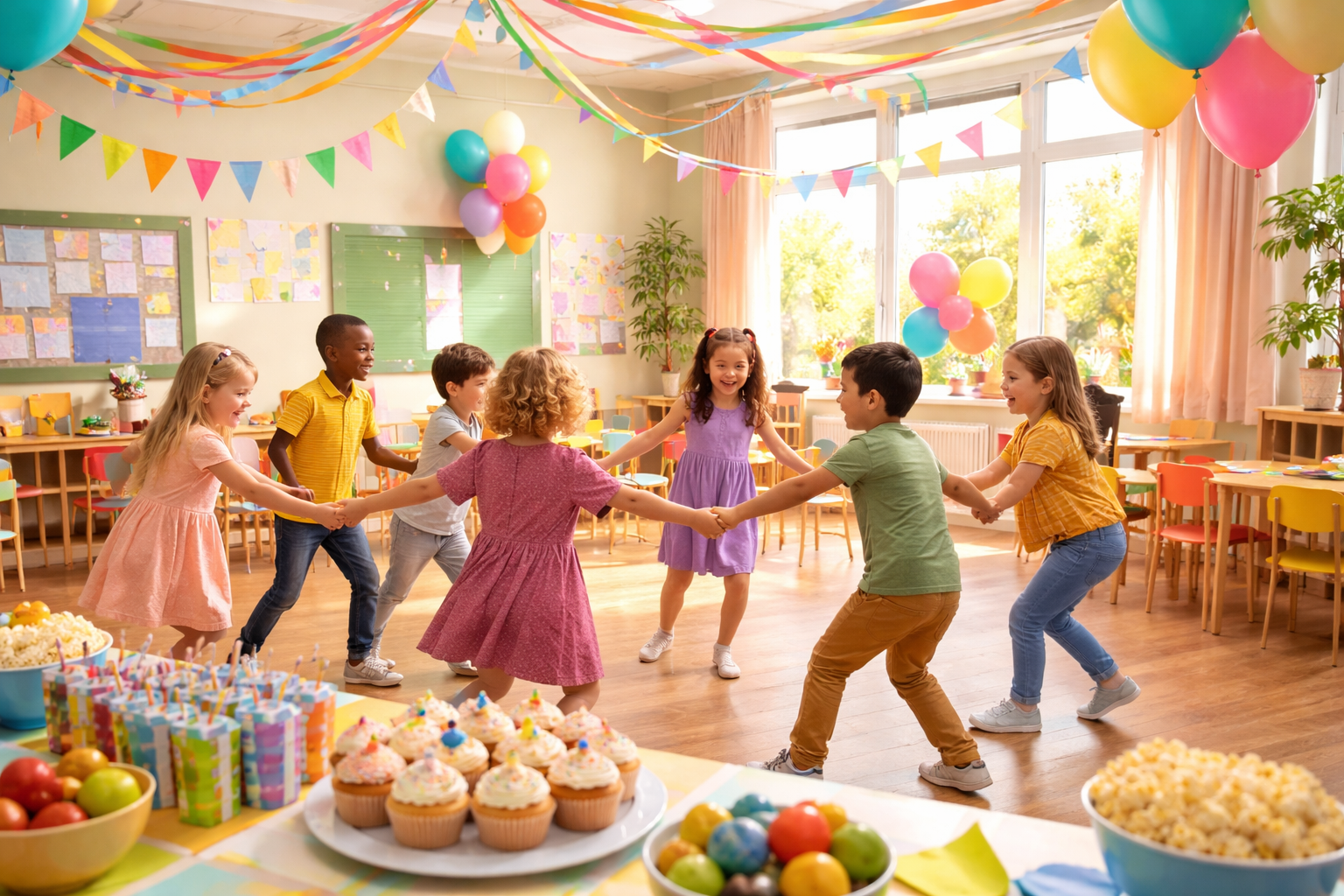
The Class Party Chaos Nobody Warns You About
It's mid-May. You've just volunteered to organize the end-of-year class party — because nobody else raised their hand and the teacher looked desperate. You send out a group text to 24 parents asking who can bring what. Within 48 hours, you have three people bringing cupcakes, zero people bringing plates, two parents who never responded, one dad who says he'll 'bring something,' and a mom who signed up for juice boxes but just texted to say she's now dairy-free and confused about whether juice has dairy. You have four weeks until the party and somehow feel further behind than when you started.
Sound familiar? End-of-year class parties are one of those events that should be simple and joyful — a celebration of a whole year of growth, friendships, and survived homework meltdowns — but they routinely turn into logistical nightmares for the one brave soul who steps up to coordinate them. The problem isn't that parents don't care. It's that coordinating a group of busy adults with no shared system, no clear roles, and no easy way to confirm who's doing what is genuinely hard.
This guide will walk you through exactly how to plan a class party that kids will rave about on the bus ride home — and that parents will actually show up to prepared, on time, and stress-free.
Step 1: Lock Down the Basics Before You Tell Anyone Anything
The biggest mistake new party coordinators make is crowdsourcing decisions before they've made any decisions themselves. When you ask 25 parents 'What should we do for the party?' you get 25 different answers and a very long thread.
Before you send a single message, get these four things confirmed with the teacher:
- Date and time: Is it during school hours or after? How long is the window — 45 minutes or 2 hours?
- Location: Classroom only, or can you use the gym or outdoor space?
- Budget: Is there a class fund? What's the per-family contribution expectation?
- Restrictions: Allergies in the class, school food policies, screen time rules, noise limits.
Once you have these answers, you're not asking for input — you're asking for help executing a plan. That's a much easier ask.
Step 2: Build a Simple Party Structure Kids Will Actually Enjoy
Here's the truth about class parties: kids don't need elaborate themes or Pinterest-worthy setups. They need free time with their friends, food they like, and one or two activities that feel special. That's it.
A reliable 90-minute party structure that works for grades K–5:
- 0–20 min: Arrival + free play or a simple icebreaker game (works well while latecomers trickle in)
- 20–50 min: Main activity — more on this below
- 50–75 min: Food and drinks
- 75–90 min: Wind-down, cleanup, any small keepsakes or memory-sharing
For the main activity, pick ONE thing and do it well. A few crowd-tested options:
- Memory Yearbook Pages: Each kid decorates a page about their favorite school year moment. Compile into a class booklet.
- Outdoor Field Games: Relay races, water balloon toss, or a simple obstacle course if weather permits.
- Talent Mini-Show: Kids sign up in advance to share a 60-second talent. Surprisingly popular and zero-cost.
- Trivia About the Class: Questions like 'Who lost the most pencils this year?' or 'What was our class's most-read book?' Kids go wild for this.
Step 3: Assign Roles, Not Just Items
This is where most class parties fall apart. The coordinator sends a signup sheet for supplies — napkins, juice, fruit — and assumes that's enough. But supplies showing up doesn't mean the party runs itself.
Instead, assign roles with clear responsibilities:
- Setup Crew (2–3 parents): Arrive 30 minutes early to arrange tables, hang any decorations, and set out supplies.
- Activity Lead (1 parent): Runs the main activity, explains rules, keeps energy up.
- Food Station Manager (1–2 parents): Handles serving, manages portions, watches for allergy concerns.
- Cleanup Crew (2–3 parents): Can overlap with setup crew — they know where everything goes.
When you give parents a role rather than just an item to buy, they feel more invested and more prepared. A parent who knows she's the Activity Lead will show up on time and ready. A parent who just bought juice boxes may drop them off and disappear.
Step 4: Use a Real RSVP and Signup System — Not a Group Text
This is the single biggest upgrade you can make to your party planning process. Group texts and email chains are where coordination goes to die. Messages get buried, people forget to respond, and you end up chasing down confirmations the night before.
Using a dedicated RSVP and event coordination tool like RSVPlinks changes the entire dynamic. You create one link, share it with all parents, and they can confirm attendance, sign up for contribution items, and see what others have already claimed — all in one place. No double cupcake orders. No mystery 'I'll bring something' parents. No frantic last-minute texts.
Here's how it plays out in practice: Sarah, the party coordinator for Mrs. Kim's 3rd-grade class, sends one RSVPlinks link to all 22 families two weeks before the party. Within 48 hours, 18 families have responded. She can see at a glance that drinks and snacks are covered, but she still needs someone to bring plates and a parent volunteer for setup. She sends one targeted follow-up to the four non-responders. Done. No chaos, no spreadsheet, no anxiety spiral.
Step 5: Communicate Clearly and Only Twice
Over-communication is a real problem in class party planning. When parents get five reminder messages, they start ignoring all of them. Aim for exactly two communications after your initial invitation:
- One week out: A brief update confirming the plan, any last open slots, and a reminder of the date/time/location.
- Day before: A short, friendly reminder with any final logistics (parking, what to wear if there's outdoor activity, etc.).
Keep both messages short. Bullet points over paragraphs. Parents are busy — they'll read three lines, not three paragraphs.
Step 6: Plan for the Moments That Actually Make Memories
The food will be forgotten. The decorations will be forgotten. What kids remember — and what parents love hearing about at the dinner table — are the moments.
Build in at least one intentional memory-making moment:
- A 'shoutout circle' where each kid says one nice thing about the classmate to their left
- A printed 'Class of [Year]' certificate or bookmark each child takes home
- A group photo with a fun prop or sign
- A teacher appreciation moment where kids share one thing they learned or loved about the year
These cost almost nothing and take five minutes. But they're what gets talked about for weeks.
Step 7: Make Cleanup Part of the Plan — Not an Afterthought
Nothing sours a great party faster than a coordinator left alone at 3pm surrounded by cupcake wrappers and deflating balloons. Before the party starts, confirm your cleanup crew and set a clear end time. Brief your setup volunteers that they're also your cleanup team. Have trash bags ready and visible. Assign one person to handle leftover food decisions on the spot.
A five-minute cleanup briefing before the party starts saves 30 minutes of exhausted scrambling at the end.
Your 3 Action Steps for Today
You don't need to have everything figured out. You just need to start. Here's what to do right now:
- Email or text the teacher today to confirm date, time, location, and any restrictions. Don't plan anything until you have these four answers.
- Set up your RSVP and signup link using a tool like RSVPlinks so parents can confirm attendance and claim contribution items without a single group text.
- Choose your ONE main activity from the list above and commit to it. Simplicity is what makes parties work — not variety.
End-of-year class parties don't have to be stressful. With a clear structure, defined roles, and the right tools to coordinate your volunteers, you can pull off a party that kids are still talking about on the first day of summer — and that makes you the hero of the parent group chat for the rest of the year.